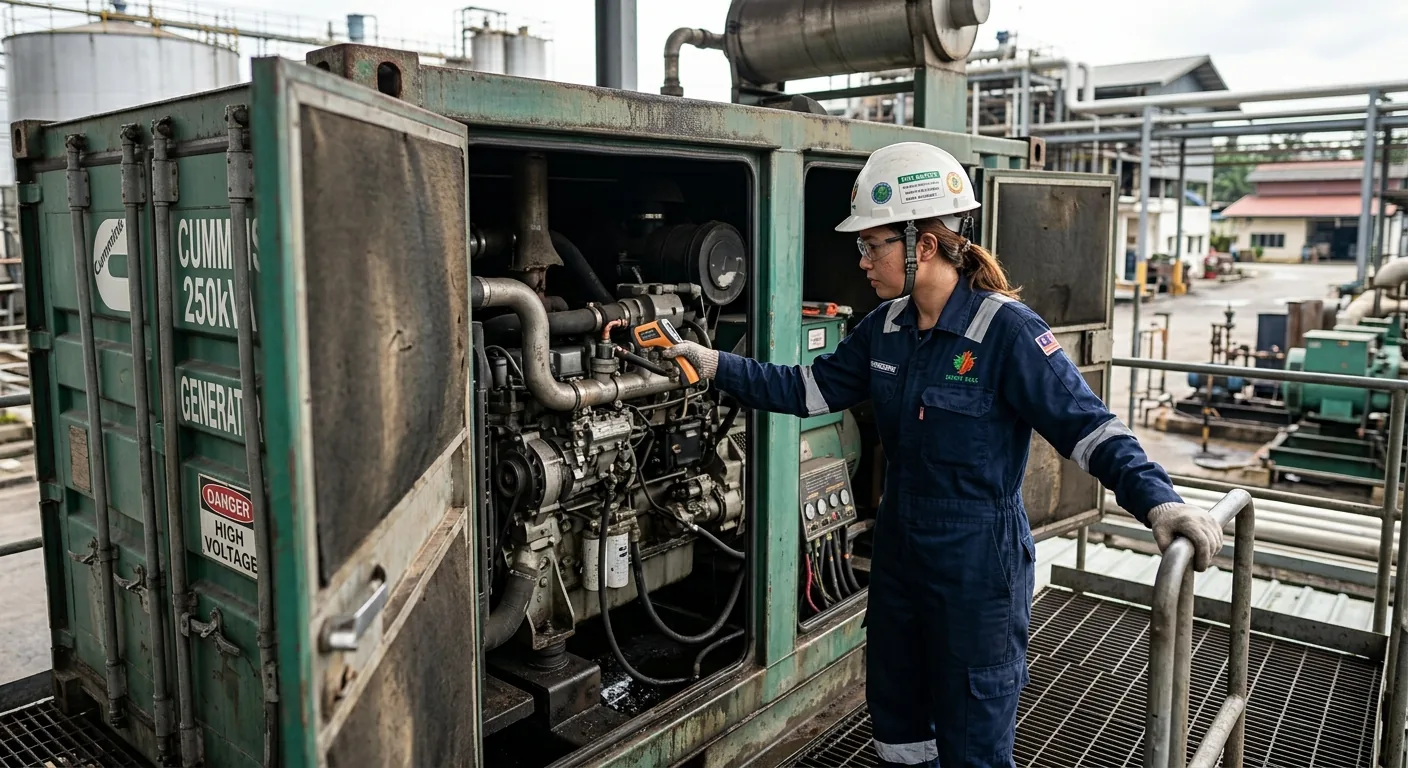
A genset DOSH certificate is confirmation from the Department of Occupational Safety and Health that a genset (under the Pressure Management Activity category / unfired pressure vessel and related components) is safe to operate on a work site. For genset rental, make sure the unit is DOSH certified and the documents are valid before it mobilises to site.
Many site managers turn a genset away at the gate if the DOSH paperwork is incomplete, and they are right to. Here is why this certificate matters and exactly what you should check before signing any rental.
What Is a Genset DOSH Certificate?
A genset DOSH certificate is an official document confirming that a genset unit meets the safety requirements under the Occupational Safety and Health Act (OSHA 1994) and related machinery legislation.
DOSH (the Department of Occupational Safety and Health / Jabatan Keselamatan dan Kesihatan Pekerjaan) is the government body that regulates machinery safety in the workplace. Certain components of larger gensets fall into a category that requires periodic inspection and a valid certificate.
When we say a genset is 'DOSH certified', it means the unit has passed inspection and holds documents that are still within their valid period. Without this, many project sites, especially oil and gas, major construction, and factories, will not let the genset onto the premises.
- DOSH = the body regulating workplace machinery safety (under OSHA 1994)
- The certificate confirms the genset is safe to operate and has been inspected
- Many large sites make DOSH documents mandatory before mobilisation
- Certificate validity is time-limited; it must be renewed on the inspection schedule
PMA vs DOSH: What Is the Difference?
PMA (Pressure Management Activity) is one of the machinery categories overseen by DOSH, so PMA and DOSH are not two opposing things, but parts of the same system.
For a genset, certain components can be classed as machinery that must be registered and inspected. When a contractor mentions a 'PMA certificate', they usually mean the machinery inspection document issued through the DOSH process.
Do not get tangled in the terminology. What matters when you rent is this: the unit has valid inspection documents, and those documents can be shown to the safety officer on site. If you are unsure about the technical terms, ask the vendor to explain which document is relevant for the specific unit you are renting.
- PMA = a pressure-equipment machinery category under DOSH oversight (not the opposite of DOSH)
- Larger gensets can have machinery components that require registration and inspection
- 'PMA certificate' and 'DOSH cert' usually refer to the same inspection process
- Ask the vendor to clarify which document is valid for your specific unit
Why Do Site Managers Always Ask for This Certificate?
Site managers ask because they carry full responsibility for safety on site. If an incident happens and the genset has no valid documents, they are the ones who face the audit and the consequences.
For construction projects, factories, large events, and oil and gas, the HSE (Health, Safety and Environment) team will request the documents before allowing any machinery in. A genset without a certificate is automatically rejected at the gate, and you lose both time and mobilisation cost.
This is why making sure the documents are complete BEFORE sending the unit to site saves a lot of trouble. A proper vendor provides the documents as standard, not as something you have to chase at the last minute.
- The site manager / HSE officer is responsible for machinery safety on site
- The audit and consequences fall on them if the documents are not valid
- A genset without a certificate is usually rejected right at the site entrance
- Complete documents = avoid delays and wasted mobilisation cost
What to Verify Before You Rent a Genset
Before signing the rental agreement, confirm four things: the certificate status, the expiry date, that the document matches the actual unit, and that the vendor can support you if the site asks for extra documents.
Do not assume 'DOSH certified' in an advert means the document is valid for the unit that will be delivered. Ask to see the actual document and make sure the serial number / unit details match the genset you receive.
You can use this short checklist directly when you get in touch with a vendor.
- Confirm the unit is DOSH certified; ask to see the document, not just the advert
- Check the valid / expiry date on the inspection document
- Make sure the unit details in the document match the genset that is delivered
- Ask whether the vendor can supply extra documents for site requirements (e.g. HSE plan)
| Item | What to Ask / Check |
|---|---|
| Certificate status | Is the unit DOSH certified? Can they show the document? |
| Validity period | When was the inspection date and when does it expire? |
| Unit match | Do the document details match the unit delivered? |
| Site support | Can they provide documents for the site's HSE requirements? |
The Basics of a Temporary Permit
A temporary permit is short-term authorisation to operate machinery on a site for a limited period, often relevant for a rental genset on a project or a fixed-term event.
The process and requirements for a permit can vary by the type of machinery, the location, and the duration of use. That is why it is important to discuss early, so the documents are arranged before the mobilisation date rather than rushed at the last moment.
An experienced genset vendor can advise which documents are typically needed for your situation. For the specifics of your unit and rental period, get in touch for a quote and we will review the requirements together.
- Temporary permit = authorisation to operate machinery for a limited period on site
- Requirements differ by machinery type, location and duration; confirm early
- Arrange the documents before mobilisation, not at the last minute
- Get in touch for a quote; we help review the requirements for your situation
- A genset DOSH certificate = official confirmation the unit is safe to operate and has been inspected under OSHA 1994.
- PMA is a machinery category under DOSH, not a rival system; the terms usually refer to the same process.
- Many large sites (construction, factories, oil and gas, events) reject gensets without valid DOSH documents.
- Before you rent: check the certificate status, expiry date, unit match, and document support for site requirements.
- Arrange documents and the temporary permit BEFORE mobilisation to avoid delays and wasted cost.
Contact Us Now — Reply Within 1 Hour
What a genset DOSH certificate is, why site managers ask for it, and what to verify before you rent. Contact us for DOSH certified gensets.
WhatsApp NowFAQ
Does every rental genset need a DOSH certificate?
It depends on the unit size and the site's requirements. Larger gensets and high-risk project sites usually require DOSH documents; confirm with your vendor and the site's HSE officer before you rent.
What is the difference between a DOSH certificate and a PMA certificate?
PMA (Pressure Management Activity) is a machinery category under DOSH oversight, not a separate or opposing certificate. Both terms usually refer to the same machinery inspection process; ask the vendor to explain which document is valid for your unit.
How long is a genset DOSH certificate valid?
The validity period varies by machinery type and inspection schedule, so it is not fixed. Always check the inspection date and expiry date on the actual document before the unit is sent to site.
What happens if a genset enters a site without DOSH documents?
Most large sites will reject the unit straight away at the entrance. You lose time, mobilisation cost, and possibly face delays to the work schedule, which is why the documents must be complete before delivery.
Can the vendor help arrange a temporary permit?
An experienced vendor can advise which documents are typically needed for your situation. For the specifics of your unit and rental period, get in touch for a quote and we will review the requirements together.
How do I make sure the genset delivered is genuinely DOSH certified?
Do not rely on the advert alone. Ask to see the actual document and make sure the unit details in it match the genset you receive. Also confirm the document's valid date is still in force.