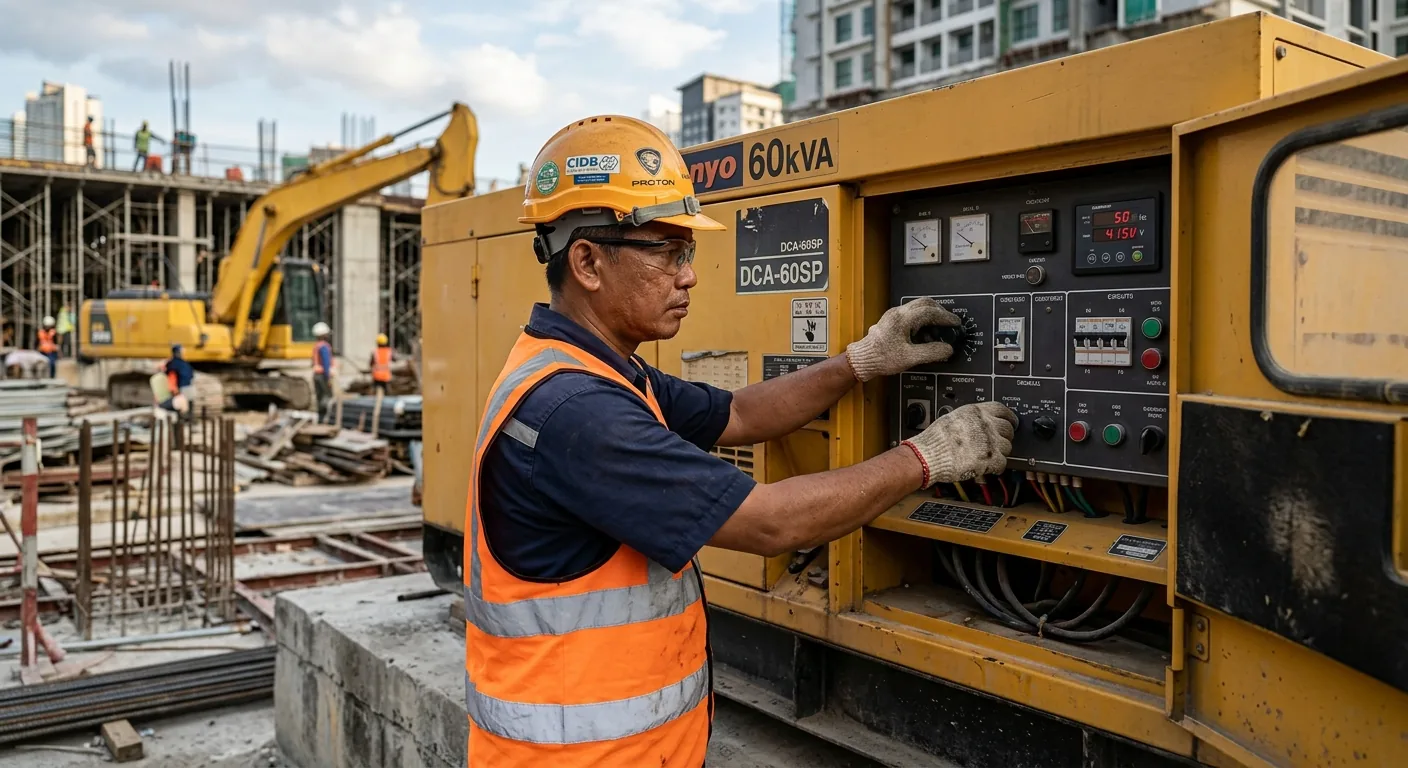
Proper genset rental maintenance means checking engine oil, coolant and fuel levels before every start, avoiding overload so you save diesel, and refuelling before the tank runs dry. Watch for unusual noise or smoke, and report any problem to the rental company right away.
A rental genset should be looked after like your own asset throughout the hire period — a little daily effort prevents downtime at critical moments and avoids unnecessary damage charges.
What should you check before starting the genset?
Before firing up the genset each day, check three key things: engine oil level, coolant, and fuel. These three are the most common reasons a genset trips or fails when neglected.
Open the bonnet or service panel and read the oil dipstick — make sure the level sits within the safe range and isn't too low. Coolant is checked at the reservoir tank; if the level drops sharply, that's a sign of a possible leak you should report.
Look around the unit for oil or diesel leaks on the floor, and make sure the output cables are tight and free of corrosion. This quick inspection takes under 5 minutes but saves a lot of trouble.
- Engine oil — confirm the level is within the safe range on the dipstick
- Coolant/radiator — check the reservoir, be alert if it drops quickly
- Fuel/diesel — make sure there's enough for the planned shift
- Leak check — inspect the floor under the unit for oil or diesel
- Cable connections — make sure they're tight, with no corrosion or excess heat
| Daily check item | What to look for |
|---|---|
| Engine oil | Level within the safe range on the dipstick |
| Coolant | Reservoir sufficient, no sudden drop |
| Fuel/diesel | Enough for the planned shift |
| Leaks & cables | No floor leaks, connections tight |
Why shouldn't you overload the genset? (save diesel)
Don't overload the genset — excess load makes the engine work harder, burns more diesel, and can trip or damage the unit. A safe target is usually around 70–80% of the unit's rated capacity.
When a genset is loaded beyond its limit, fuel consumption spikes without delivering any useful extra power. On the flip side, running too low (underload) for long periods isn't good for a diesel engine either.
That's why it's important to build a load list first — add up the total wattage of all the equipment you plan to connect — and match it to the right kVA size. If in doubt, confirm the size with the rental company based on your load list.
- Aim to use ~70–80% of rated capacity, not 100%
- Overload = more diesel, more heat, risk of tripping and damage
- Prolonged underload is also bad for a diesel engine
- Build a load list (total wattage) before choosing the genset size
- Confirm the kVA size with the rental company per your load list — this is an estimate only
| Load level | Effect |
|---|---|
| Below ~50% (underload) | Bad for the engine over the long term |
| ~70–80% (safe range) | Balanced, diesel-efficient, low risk |
| 90%+ (near overload) | Hot, burns diesel, risk of tripping |
How long can a genset run & when should you refuel?
Genset runtime depends on tank size, kVA size, and how heavy the load is — so the exact figure varies from unit to unit. As a rough guide, many rental gensets can run from a few hours up to a full work shift between refuels at moderate load.
The heavier the load, the faster the diesel runs out. Don't wait for the tank to run completely dry — refuel once the level drops to a quarter tank to avoid air entering the fuel system and the genset cutting out suddenly.
For 24-hour operations or long events, plan your refuelling schedule ahead of time. The estimates below are only a rough guide; ask the rental company for the actual runtime of your unit.
- Runtime depends on tank size + kVA + how heavy the load is
- Heavy load = diesel runs out faster
- Refuel when the level drops to ~a quarter tank, don't wait for empty
- An empty tank can let air into the fuel system & make restarting difficult
| Factor | Effect on runtime |
|---|---|
| Light load (~30–50%) | Longer runtime, diesel-efficient |
| Moderate load (~70–80%) | Balanced runtime, safe range |
| Heavy load (~90%+) | Short runtime, diesel runs out fast |
| Small tank size | Frequent refuelling |
What problems should you report to the rental company?
Report anything unusual to the rental company immediately — don't try to fix a unit you've hired yourself. Most rental contracts include technical support, so use it.
Warning signs include excessive black or white smoke, strange knocking noises, heavy vibration, coolant or oil levels dropping fast, and warning lights on the control panel. A genset that trips often or is hard to start should also be reported.
Acting early stops a small fault from turning into a big one — and keeps you from being blamed for damage that's actually a service issue. Note the time and what happened when you file a report.
- Excessive black/white smoke or a burning smell
- Knocking noises, heavy vibration, or panel warning lights
- Oil or coolant levels dropping fast (possible leak)
- Genset trips often, is hard to start, or has unstable voltage output
- Don't fix it yourself — contact the rental company for technical support
| Warning sign | Action |
|---|---|
| Excessive smoke / burning smell | Report immediately, stop operating |
| Knocking noise / heavy vibration | Contact technical support |
| Oil or coolant dropping fast | Report a possible leak |
| Frequent tripping / hard to start | Note the time & report |
- Check engine oil, coolant and fuel every day before starting — under 5 minutes, saves a lot of trouble.
- Don't overload: aim for ~70–80% of rated capacity to save diesel and avoid tripping.
- Build a load list first, then confirm the kVA size with the rental company — an estimate only.
- Refuel when the level drops to a quarter tank; don't wait for the tank to run dry.
- Report smoke, strange noises, leaks or tripping to the rental company — don't fix it yourself.
Contact Us Now — Reply Within 1 Hour
Genset rental maintenance tips: check oil, coolant, fuel, avoid overload, estimate runtime & when to refuel. Read the quick guide. Contact us for a quote.
WhatsApp NowFAQ
How often should I check the oil on a rental genset?
Ideally, check the engine oil level every day before starting, especially for units running for hours at a time. For continuous 24-hour operations, check periodically throughout the shift and report if the level drops quickly.
What happens if a genset is overloaded?
An overloaded genset burns more diesel, overheats, and can trip or fail. Aim to use around 70–80% of rated capacity to stay safe and save fuel.
How long can a rental genset run without refuelling?
It depends on tank size, kVA, and how heavy the load is, so the exact figure varies from unit to unit. As a rough guide, it can last a few hours up to one shift at moderate load — ask the rental company for the actual runtime.
Can I repair a faulty rental genset myself?
It's not recommended — rental units are usually covered by the company's technical support. Fixing it yourself can worsen the damage and leave you liable, so report it immediately.
How do I know the right genset size?
Build a load list — add up the wattage of all the equipment you plan to connect — then match it to a suitable kVA range. Rental gensets typically come in the 20kVA–500kVA+ range; confirm the exact size with the rental company per your load list.
When is the best time to refuel a genset?
Refuel when the diesel level drops to around a quarter tank, don't wait for empty. An empty tank can let air into the fuel system and make the genset hard to restart.