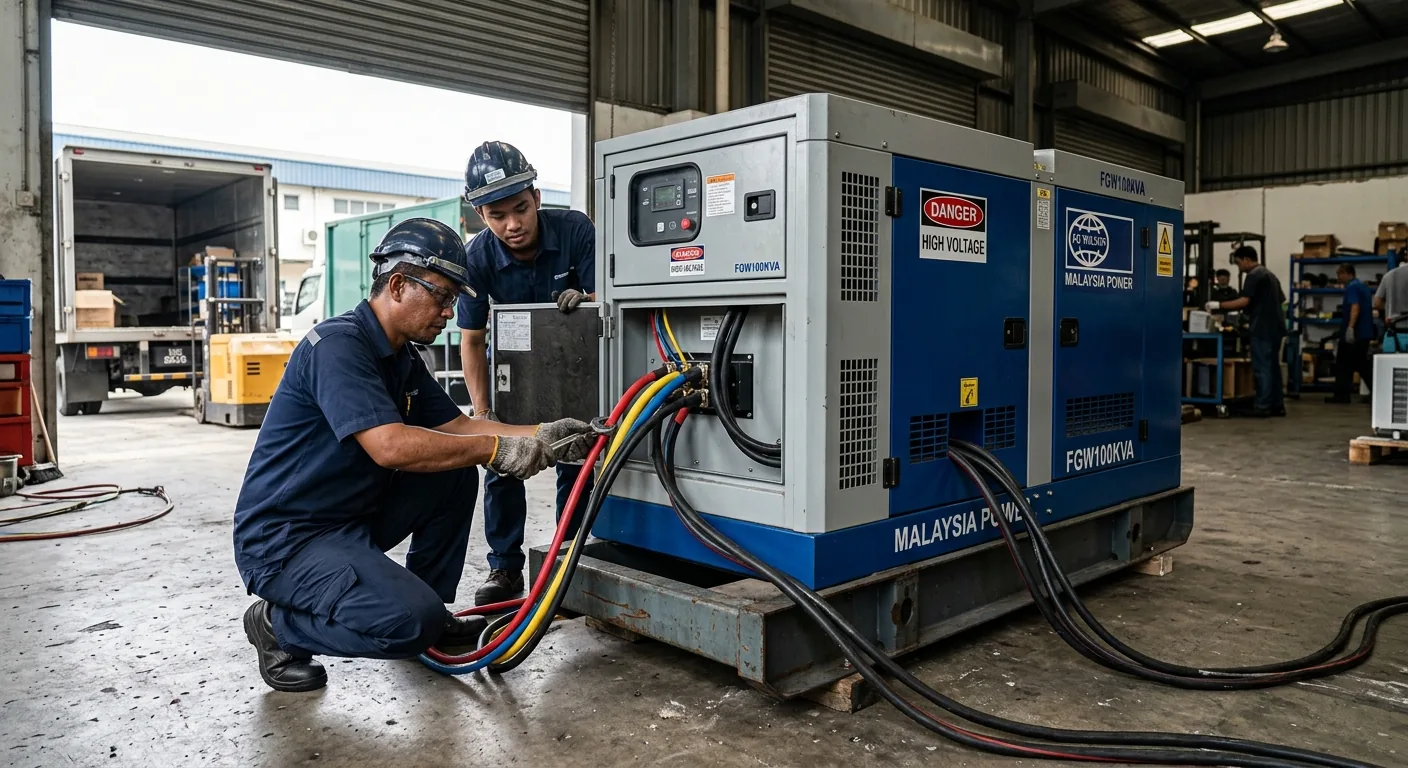
The difference between a 1 phase and 3 phase genset comes down to voltage and the type of load. A 1 phase genset (240V) suits light loads like homes, shops and offices. A 3 phase genset (415V) is essential for industrial machinery, large motors and factories. Choose based on the nameplate of your equipment.
Pick the wrong phase and you can damage your machine, or the genset simply won't start at all. That's why it's important to know exactly what load you're running before you book a generator.
What Is the Main Difference Between a 1 Phase and 3 Phase Genset?
The most basic difference between a 1 phase and 3 phase genset is the number of live wires and the voltage delivered. A 1 phase supply sends a single wave of power at 240V, while a 3 phase supply sends three alternating waves at 415V.
Because of those three waves, a 3 phase genset delivers power that is smoother and more stable. It can carry motor loads and heavy machinery without any noticeable voltage drop.
A 1 phase genset, on the other hand, is simpler and usually comes in a smaller kVA size. It's enough for everyday loads that don't involve large motors.
- 1 phase: 240V, one live + one neutral — light loads
- 3 phase: 415V, three live + one neutral — heavy loads & motors
- 3 phase delivers more even power with less voltage drop
- 3 phase equipment will NOT run on a 1 phase genset
| Feature | 1 Phase | 3 Phase |
|---|---|---|
| Voltage | 240V | 415V |
| Live wires | 1 | 3 |
| Stability | Moderate | High |
| Suited for | Home, shop | Factory, machinery |
Which Loads Need 1 Phase, and Which Need 3 Phase?
The most accurate way to tell is to check the nameplate (specification plate) on your equipment — it states whether it's 1 phase or 3 phase. If you have more than one large motor or industrial machine, chances are you'll need 3 phase.
Light loads such as lights, fans, refrigerators, TVs and standard plug points all run on 1 phase. This covers almost every need for homes, retail shops and small offices.
Heavy loads like 3 phase motors, compressors, conveyors, cranes and production machinery must use 3 phase. Most factories and construction sites fall into this category.
- 1 phase: lights, fans, refrigerators, small aircond, offices
- 1 phase: eateries, market booths, small weddings
- 3 phase: CNC machines, large compressors, conveyors, cranes
- 3 phase: factories, construction sites, plants, large HVAC systems
| Location | Typically Uses | Estimated kVA |
|---|---|---|
| Home / shop | 1 phase | 20kVA–60kVA |
| Office / event | 1 or 3 phase | 30kVA–100kVA |
| Factory / construction site | 3 phase | 100kVA–500kVA+ |
How Do I Know Which One I Need?
Step one: check the nameplate on each piece of equipment and note the voltage and phase listed. If it shows 415V or '3PH', you'll need a 3 phase genset.
Step two: build a load list — add up the power of every piece of equipment that will run at the same time. This helps us recommend the right kVA size, since motors usually draw a much higher starting current than their normal running power.
The kVA sizes here are rough estimates only. Confirm with an actual load list — contact us for an accurate quote based on your load.
- Check the nameplate: look for '240V/1PH' or '415V/3PH'
- List every load that runs at the same time
- Account for the start-up power surge on motors
- When in doubt, send a photo of the nameplate — we'll help you work it out
| Marking on Nameplate | Meaning |
|---|---|
| 240V / 1PH | 1 phase genset |
| 415V / 3PH | 3 phase genset |
| Three-line symbol present | 3 phase |
Can a 3 Phase Genset Handle a 1 Phase Load?
Yes — a 3 phase genset can supply a 1 phase load because each individual phase puts out 240V. That's exactly why a 3 phase genset is more flexible for sites with a mix of loads.
The reverse, however, doesn't work: a 1 phase genset CANNOT run 3 phase equipment. Even if you try to connect it, the machine won't function properly and may be damaged.
For mixed sites (for example, a factory with an office), a 3 phase genset is usually the safest choice. The 1 phase loads are spread evenly across the three phases so everything stays balanced.
- 3 phase can supply a 1 phase load (240V per phase)
- 1 phase CANNOT run 3 phase equipment
- Mixed-load site: choose 3 phase for flexibility
- Distribute 1 phase loads evenly so all three phases stay balanced
| Genset | 1 Phase Load | 3 Phase Load |
|---|---|---|
| 1 Phase | Yes | No |
| 3 Phase | Yes | Yes |
Is There a Cost Difference Between 1 Phase and 3 Phase Rental?
Rental cost isn't determined by phase alone, but by kVA size, rental duration and related charges. A 3 phase genset is usually a larger size, so its rental tends to be higher.
Genset rental starts from RM300/day for small units and rises with capacity (20kVA–500kVA+). Longer terms (weekly/monthly) usually earn a lower rate per day.
Other factors include delivery, diesel and deposit. With so many variables, we provide an accurate quote only once we know the size and duration — and all our gensets are DOSH certified.
- Price depends on kVA, duration, delivery, diesel & deposit
- Rental from RM300/day; rises with unit size
- Range of 20kVA–500kVA+ for various needs
- Monthly rental is usually more economical per day
| Cost Factor | Effect on Price |
|---|---|
| kVA size | Bigger size, higher cost |
| Rental duration | Longer term, lower cost/day |
| Delivery & diesel | Added based on distance & usage |
- A 1 phase genset = 240V for light loads; 3 phase = 415V for machinery and large motors.
- 3 phase equipment requires a 3 phase genset — a 1 phase genset simply won't run it.
- A 3 phase genset can supply a 1 phase load, making it more flexible for mixed sites.
- The most accurate way to know your phase: check the nameplate (240V/1PH or 415V/3PH).
- Rental cost depends on kVA, duration, delivery & diesel — not phase alone; from RM300/day.
Contact Us Now — Reply Within 1 Hour
Genset 1 phase vs 3 phase: compare voltage, load & application. Know which fits home, shop or factory. WhatsApp us for a genset rental quote.
WhatsApp NowFAQ
What's the difference between a 1 phase and 3 phase genset?
A 1 phase genset delivers 240V through a single live wire, suited for light loads. A 3 phase genset delivers 415V through three live wires, suited for industrial machinery and large motors. 3 phase provides power that is smoother and more stable.
Does my home need a 1 phase or 3 phase genset?
Most homes use 1 phase because loads like lights, refrigerators and small aircond all run on 240V. You'd only need 3 phase if you have industrial equipment or large motors at home. Check the nameplate to be sure.
Can a 3 phase genset be used for a 1 phase load?
Yes. Each individual phase in a 3 phase genset puts out 240V, so it can supply a 1 phase load. That's why a 3 phase genset is the flexible choice for sites with a mix of 1 phase and 3 phase loads.
How do I know if my equipment is 1 phase or 3 phase?
Look at the nameplate (specification plate) on the equipment. If it shows 240V or '1PH', it's 1 phase; if it shows 415V or '3PH', it's 3 phase. Send us a photo of the nameplate and we'll help confirm it.
What kVA size do I need?
It depends on the total load running at the same time, and motors usually draw a higher starting current. Rough estimates: home/shop 20kVA–60kVA, factory 100kVA–500kVA+. Confirm with an actual load list for the exact size.
Is a 1 phase genset cheaper to rent than 3 phase?
Usually yes, because 1 phase units tend to be a smaller kVA size. But the actual cost depends on kVA, duration, delivery and diesel — not phase alone. Rental starts from RM300/day; contact us for an accurate quote.