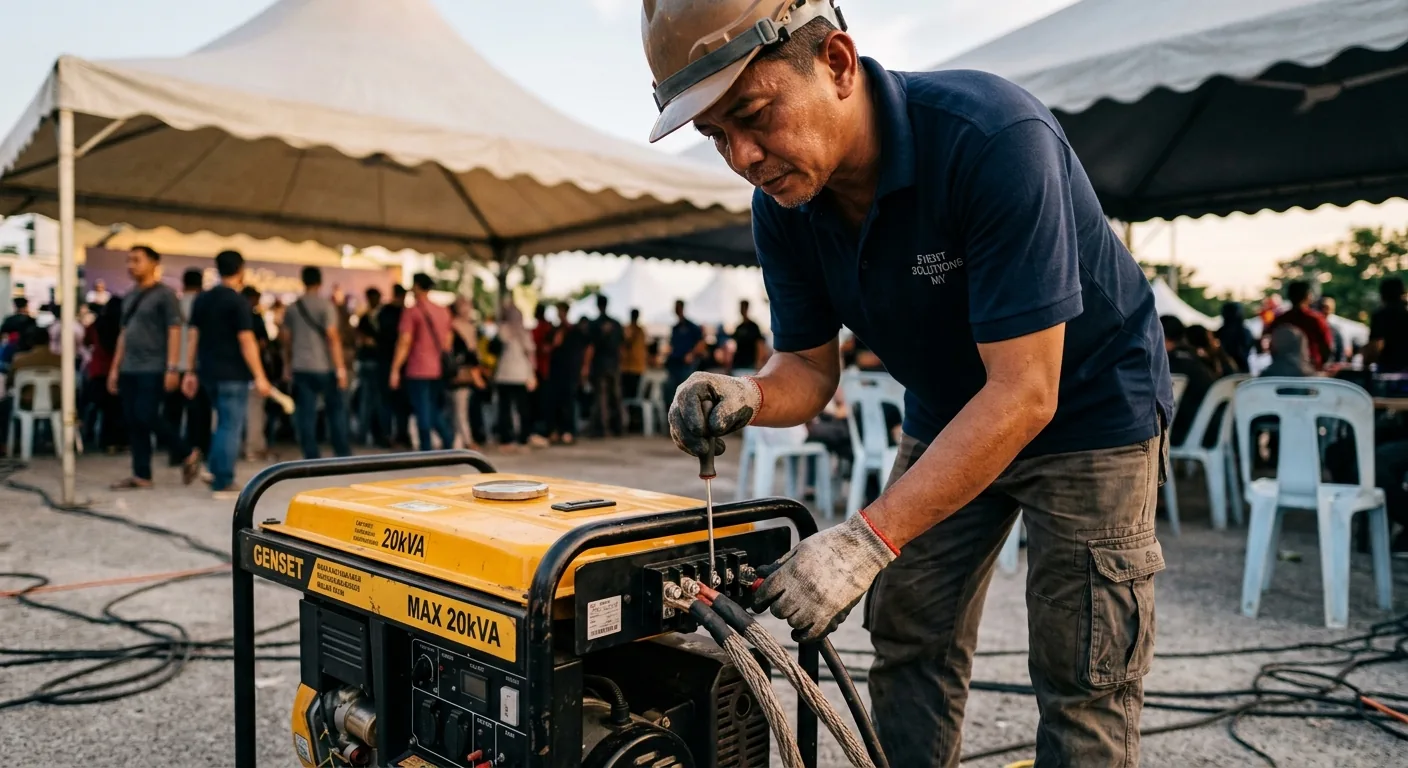
For diesel vs petrol genset: go diesel if you have heavy loads, long runtimes and frequent use (sites, large events, industrial standby) — it's more fuel-efficient and built tough. Choose petrol for low power, portability and occasional use. Diesel wins on long-term cost; petrol wins on upfront price and size.
Picking the wrong genset type means you either pay more for fuel or end up with a unit that isn't powerful enough. The deciding factors are actually simple: how heavy the load is, how long you need to run it, and how often you use it.
Diesel vs petrol genset — what's the main difference?
The biggest difference between a diesel vs petrol genset comes down to engine type and intended use. Diesel is built for high power and running for hours on end; petrol is lightweight and suits low power and simpler jobs.
Diesel typically comes in larger ranges (roughly 20kVA up to 500kVA+), while petrol units usually sit at the smaller, portable end. That's why contractors, event organisers and factories lean toward diesel.
If you only need power for a stall, a home during a blackout, or small equipment, petrol is more than enough and far easier to move around.
- Diesel: high power, long runtime, tough engine — for heavy-duty work
- Petrol: lightweight, portable, lower unit price — for light work
- Diesel covers a wide range (20kVA–500kVA+); petrol is usually small
- The choice depends on load, runtime and how often you use it
| Factor | Diesel | Petrol |
|---|---|---|
| Power | Medium–very high | Low–medium |
| Unit size | Large, often skid/towable | Small, portable |
| Best for | Sites, large events, standby | Stalls, homes, small tools |
Which is more fuel-efficient and longer-lasting?
For fuel efficiency and durability, diesel generally wins — which is exactly why industry chooses diesel for long-term operations.
Diesel engines burn fuel more efficiently under high loads and can run for hours without stress. Petrol engines tend to consume more fuel per hour when pushed hard, so fuel costs climb on heavy-duty work.
On durability, diesel engine blocks are built tough for a long service life and heavy work cycles. Petrol is better suited to occasional use, not running 8–12 hours every day.
- Diesel: better fuel efficiency under high load + long runtime
- Petrol: burns through fuel faster when pushed hard continuously
- Diesel: tough engine, suited to a heavy daily duty cycle
- Petrol: best for short, occasional use
| Aspect | Diesel | Petrol |
|---|---|---|
| Fuel efficiency (high load) | More efficient | Less efficient |
| Comfortable runtime | Long (hours on end) | Short–medium |
| Engine durability | Tough, heavy duty | For light use |
Load and use-case — when to use which?
Match the genset type to the load: diesel for large, critical loads and petrol for small, portable ones.
For construction sites, large events (PA, lighting, booths), factory standby or industrial equipment, diesel is the safe pick because it can handle motor starting current and continuous loads. As a rough guide: small jobs may be fine at the lower end of the range, while large sites and events need a higher-rated unit.
For night-market stalls, home backup during an outage, or light power tools, a small petrol unit is enough and much easier to carry. The kVA figures here are only estimates — confirm against your actual load list (every appliance + watts) before you book.
- Heavy / critical load / large motors → diesel
- Small load / portable / occasional → petrol
- Long daily runtime → diesel; short runtime → petrol is enough
- kVA = estimate only — confirm against your load list first
| Use-case | Recommendation | Size note |
|---|---|---|
| Construction site | Diesel | Medium–high estimate |
| Large event / wedding | Diesel | Based on PA & lighting load |
| Factory standby | Diesel | High range, per load list |
| Stall / home / small tools | Petrol | Small size is enough |
Cost: upfront price vs long-term cost
Petrol is usually cheaper on upfront unit price, but diesel almost always wins on total cost when used frequently and for long hours.
For rentals, cost isn't a single fixed number — it depends on several factors. Diesel genset rental starts from as low as RM300/day (actual rates depend on specs), so the best move is to get a quote based on your needs.
The main factors that drive rental pricing: kVA size, rental period (daily/weekly/monthly), delivery (distance + location), diesel fuel cost, and deposit. The bigger the unit and the farther the delivery, the higher the cost.
- Petrol: lower upfront unit price
- Diesel: cheaper per hour under heavy load → wins long-term
- Rental pricing factors: kVA, period, delivery, diesel fuel, deposit
- Diesel rental from RM300/day — contact us for an exact quote
| Cost | Diesel | Petrol |
|---|---|---|
| Upfront price / unit | Higher | Lower |
| Long-term cost (heavy load) | Cheaper | More expensive |
| Most worth it when | Used often & long | Used rarely & light |
Summary: how to choose in 30 seconds
The decision gets easy when you ask three questions: how heavy is the load, how long do you need to run it, and how often will you use it.
If the answers are heavy, long and frequent — go diesel. If they're light, short and occasional — petrol is enough. When you're torn between the two, diesel is the safer bet because it handles a wider range of loads without risking under-power.
For rental, every unit is a powerful diesel genset (20kVA–500kVA+, DOSH certified) with same-day delivery across Peninsular Malaysia — Sabah, Sarawak & Labuan subject to availability.
- Heavy + long + frequent → diesel
- Light + short + rare → petrol
- Unsure? Choose diesel — safer than under-power
- Bring your load list for an accurate size match
| Your question | If yes → Diesel | If yes → Petrol |
|---|---|---|
| Heavy load / large motors? | Yes | No |
| Running for hours every day? | Yes | No |
| Frequent & long-term use? | Yes | No |
- Diesel for heavy loads, long runtime & frequent use; petrol for low power & portability.
- Diesel is more fuel-efficient under high load and wins on long-term cost.
- Petrol is cheaper upfront and easier to carry for light work.
- When unsure, choose diesel — safer than risking under-power.
- kVA size is only an estimate — confirm against your load list before booking.
Contact Us Now — Reply Within 1 Hour
Diesel vs petrol genset — compare fuel, runtime, durability, load & cost. Diesel for heavy/long jobs, petrol for small/portable. Contact us for a rental quote.
WhatsApp NowFAQ
Diesel vs petrol genset — which is more economical?
For heavy work and long runtimes, diesel is more economical thanks to better fuel efficiency under high load. Petrol is only cheaper on upfront unit price for light, infrequent use.
When should I use a petrol genset?
Use petrol for low power and portability — stalls, home backup during an outage, or light power tools. It's lightweight, easy to carry and lower-priced per unit for occasional use.
Is a diesel genset noisier?
Noise level depends on the model and whether the unit is a silent/canopy type, not just the fuel type. Many rental diesel units come in a canopy to cut noise — contact us for silent options.
What kVA size do I need?
It depends on the total load of all your equipment. The kVA figure is only an estimate — prepare a load list (appliances + watts) so we can match the right size and avoid under-power.
How much does diesel genset rental cost?
Rental starts from RM300/day, but the actual rate depends on kVA size, period, delivery, fuel cost and deposit. Contact us for an exact quote based on your needs.
Can you deliver a genset on the same day?
Yes, same-day delivery is available across Peninsular Malaysia, subject to unit availability and scheduling. For Sabah, Sarawak and Labuan, delivery is subject to availability — confirm with us first.